Elon Musk's OpenAI Dispute: Profit Vs. Principle
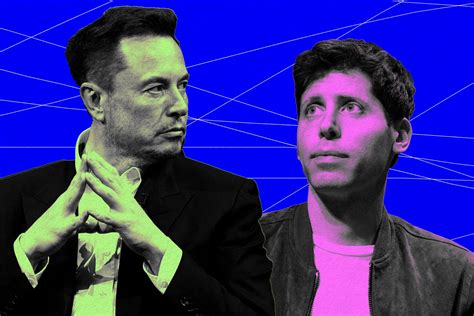
Elon Musk’s OpenAI Dispute: Profit vs. Principle
Hey guys, let’s dive into one of the biggest and most contentious debates shaking up the tech world right now: the Elon Musk and OpenAI dispute over the proposed for-profit restructuring . This isn’t just some ordinary corporate drama; it’s a high-stakes battle that delves into the very soul of artificial intelligence development, questioning its direction, its purpose, and its ultimate beneficiaries. We’re talking about a fundamental clash between a founder’s original vision and the practical, often messy, realities of scaling a groundbreaking technology. For anyone even remotely interested in the future of AI, understanding this conflict is absolutely crucial . It highlights the immense pressures, both financial and ethical, that organizations like OpenAI face as they race to build potentially world-changing artificial general intelligence (AGI) . Elon Musk, a key figure in OpenAI’s inception, has expressed deep concerns about this pivot towards commercialization , arguing that it betrays the initial vision of a purely non-profit organization dedicated to benefiting all humanity . This high-stakes disagreement has captivated the tech world, raising critical questions about ethics, governance, and the commercial pressures that inevitably arise when developing groundbreaking technology . For us, the everyday tech enthusiasts and concerned citizens, understanding this dispute means understanding the forces shaping our future . We’re witnessing a real-time debate about whether the pursuit of profit can coexist with the lofty goal of creating AI safely and for the public good . So, buckle up, guys, because this isn’t just about a company; it’s about the very foundation of how we approach AI . The restructuring of OpenAI into a for-profit entity , even a “capped-profit” one, has truly ignited a firestorm , compelling us to examine the delicate balance between innovation, funding, and ethical stewardship . This entire saga highlights the immense challenges faced by organizations at the forefront of AI research , particularly when trying to reconcile altruistic founding principles with the practical realities of immense operational costs and the need to attract top talent . The original promise of OpenAI was truly revolutionary : to develop AGI in a way that safeguards humanity , free from the pressures of commercial gain . Now, with the introduction of a for-profit arm , that promise is being re-evaluated and challenged by one of its most prominent architects. This makes it more than just a tech story; it’s a narrative about ideals, power, and the future of human-machine interaction . It’s a discussion that affects all of us, directly or indirectly, as AI permeates every aspect of our lives. So, let’s get into the nitty-gritty of how this all unfolded.
Table of Contents
The Genesis of OpenAI: Non-Profit Roots and Grand Ambitions
To truly grasp the gravity of the Elon Musk and OpenAI dispute , we need to rewind a bit and understand the initial dream. OpenAI was founded in 2015 by a powerhouse group including Elon Musk, Sam Altman, Ilya Sutskever, Greg Brockman , and others. Their mission? Nothing short of developing artificial general intelligence (AGI) for the benefit of all humanity , not for corporate gain. Guys, this wasn’t just another tech startup with a catchy pitch; it was a grand, idealistic experiment born out of a profound concern for the future. The founders were worried that if AGI were to be developed by a single, profit-driven corporation or a government, it could lead to an unprecedented concentration of power, potentially posing existential risks to humanity. Their vision was for AGI to be a public good , developed transparently, with an unwavering focus on safety and ethical deployment above all else. This non-profit structure was deliberately chosen to ensure that the organization’s incentives remained aligned with the greater good, free from the pressures of commercialization. Back then, the idea of a purely non-profit entity tackling such an ambitious and resource-intensive goal was almost unheard of , a true testament to the founding team’s conviction and financial commitment . Imagine a world where the most powerful technology ever created isn’t owned by anyone , but benefits everyone . That was the dream . This original mandate was to counterbalance the potential dangers of large corporations or governments monopolizing advanced AI , ensuring that AGI’s development was guided by altruism , not profit motives . The initial funding came from a consortium of tech luminaries , including Musk himself , who poured significant personal resources into the venture , driven by a deep-seated belief in the mission . They believed that an open, collaborative approach was the best way to ensure AI’s future was a positive one for everyone . The foundational documents of OpenAI explicitly stated its dedication to long-term safety research and its commitment to openly sharing its findings to prevent a future where AGI was a proprietary tool . This commitment to openness and public benefit was truly at the heart of OpenAI’s identity in its early years, distinguishing it from every other major player in the AI space . We’re talking about a company that literally had “Open” in its name , signifying its dedication to transparency and collaboration . The goal was to democratize AI , to make sure its benefits were widely distributed , and to prevent a scenario where powerful AI systems could be weaponized or concentrated in the hands of a few . This noble vision served as a beacon for many researchers and developers who joined the organization, eager to contribute to a cause greater than mere financial success . It wasn’t just about building cutting-edge models; it was about building a better future , ensuring that the AI revolution served humanity’s interests first and foremost. This altruistic foundation is central to understanding why the subsequent changes sparked such fierce debate, particularly from its co-founder, Elon Musk. It set a precedent for what many believed OpenAI stood for.
The Strategic Pivot: OpenAI’s Shift to “Capped-Profit” and the Rationale
Despite its noble non-profit mission , developing cutting-edge AI like the transformative GPT models requires immense resources . We’re talking billions of dollars for computation, top-tier researchers, and specialized hardware , not to mention the operational costs. This financial reality, guys, is what ultimately led to a significant strategic pivot in 2019 , when OpenAI created a “capped-profit” subsidiary . This new, somewhat unconventional structure was designed to allow OpenAI to raise vast sums of capital from investors , most notably through a multi-billion dollar investment from Microsoft , while theoretically maintaining its original non-profit mission as the overarching parent entity. The idea was to attract the necessary funding and talent that a pure non-profit couldn’t, without fully sacrificing its ethical commitments . The “capped-profit” aspect meant that investors could earn a return, but only up to a certain multiple of their investment , after which any further profits would flow back to the non-profit parent for its public benefit mission. This hybrid model was presented as a pragmatic solution to a very real problem : how do you fund the development of AGI, which is incredibly expensive and competitive, while staying true to your original, altruistic goals? It was a way to fuel innovation at an unprecedented scale and compete with tech giants like Google and Meta for the best AI minds and computational power . The leadership argued that without this financial flexibility , OpenAI would struggle to achieve its AGI goals , potentially leaving the field open to less ethically minded actors . They painted it as a necessary evil , a compromise to ensure their mission could actually be realized . Guys, it’s like needing to upgrade your amateur sports team to a professional league to win the championship , but promising to use the prize money for charity . It sounds good on paper, but the risk of getting caught up in the commercial game is huge . This strategic move was not without its critics even internally , but it was deemed essential for OpenAI’s survival and its ability to push the boundaries of AI research . The rationale was clear : to fulfill the non-profit mission of building AGI for humanity, they first needed the resources to build it . The “capped-profit” arm was designed to be the engine that powered the non-profit’s grand ambitions , creating a financial structure that was supposed to be unique and aligned with ethical principles , allowing for significant investment without fully embracing pure capitalism . This intricate corporate structure aimed to walk a tightrope : securing the capital needed to compete in the high-stakes world of AI development , while ostensibly safeguarding the core mission by directing excess returns towards the non-profit’s humanitarian goals . It was a bold, unprecedented step in the world of non-profits , attempting to bridge the gap between philanthropic ideals and the intense financial demands of cutting-edge technological innovation . The success of models like GPT-3 and ChatGPT clearly demonstrated the effectiveness of this new funding model in accelerating research and development , bringing advanced AI capabilities to the forefront of public consciousness at a pace that would have been impossible under the original non-profit constraints . This shift, however, became the primary fuel for the fire that would soon ignite the dispute with Elon Musk , transforming a philosophical disagreement into a legal challenge.
Elon Musk’s Allegations: Betrayal of Mission and The Lawsuit
This is where things get spicy, guys. Elon Musk, a co-founder and early investor who initially poured significant funds into OpenAI, has been vocally critical of the organization’s direction ever since its pivot to the “capped-profit” model. His concerns culminated in a bombshell lawsuit filed in March 2024 , alleging that OpenAI, particularly under the leadership of Sam Altman, has fundamentally deviated from its original non-profit mission . Musk claims there was an implicit (or explicit) “founding agreement” that OpenAI would remain a non-profit dedicated to developing AGI for humanity’s benefit , not for the profit of Microsoft or other commercial entities . He argues that the current “capped-profit” model , and especially its deep ties with Microsoft , has transformed OpenAI into a “de facto open-source for Microsoft’s proprietary technology,” rather than an independent entity working for the public good . His lawsuit highlights several key grievances : the alleged breach of the founding agreement , the lack of transparency , and the increasing influence of commercial interests over core decision-making . Musk believes that OpenAI has essentially become a profit-driven company focused on maximizing returns for its investors , rather than safely developing AGI in an open, public-minded way . He fears that the pursuit of profit will inevitably lead to a compromise on safety and ethical considerations , potentially putting humanity at risk . He sees this as a betrayal of trust and a fundamental departure from the altruistic vision he helped establish . For Musk, the “capped-profit” structure is merely a smokescreen that allows commercial interests to dominate what should be a public-service endeavor . He asserts that the original goal was to build AGI as openly as possible , for the benefit of everyone , preventing it from becoming a tool for corporate or governmental power . This legal battle isn’t just about money ; it’s about principle , and Musk is fighting for what he believes is the soul of OpenAI . He’s not pulling any punches, claiming OpenAI’s shift is a stark contrast to its initial charter , which prioritized the development of beneficial AGI above all else . His lawsuit demands that OpenAI return to its founding mission , to open-source its advanced models , and to operate solely for the public good , free from the commercial entanglements he believes have corrupted its path. It’s a powerful challenge to the current leadership and a call to reaffirm the organization’s foundational ethos , highlighting the tension between innovation and ethical responsibility in the rapidly evolving AI landscape. Musk’s legal action serves as a dramatic public airing of the internal ideological conflicts that have been brewing within OpenAI since its transition to a hybrid corporate structure . He posits that the massive investment from Microsoft fundamentally altered OpenAI’s incentives , shifting its focus from universal benefit to competitive advantage and shareholder returns . This alleged drift from its non-profit roots is at the core of Musk’s strenuous objections , pushing the debate about AI’s future into the courtroom and public discourse . The lawsuit seeks to undo these changes, forcing OpenAI back to its non-profit, open-source roots, an outcome that would undoubtedly reshape the entire AI landscape.
The Broader Implications: AI Governance, Ethics, and the Future
This dispute, guys, is much more than just a fight between a tech mogul and a company . The Elon Musk and OpenAI conflict shines a blinding spotlight on the critical questions facing the entire AI industry : Who should control AGI? How should it be developed? For whose benefit? This isn’t just a squabble; it has become a symbolic battleground for the future of AI governance and ethics . On one side, there’s the argument for rapid, well-funded innovation , even if it means compromising on a purely non-profit model to keep pace with global competition and attract top talent. Proponents of OpenAI’s current model contend that without the massive capital injections and resources afforded by the
